
Delivery & Setup · August 7, 2026
What Cabin Delivery Day Looks Like
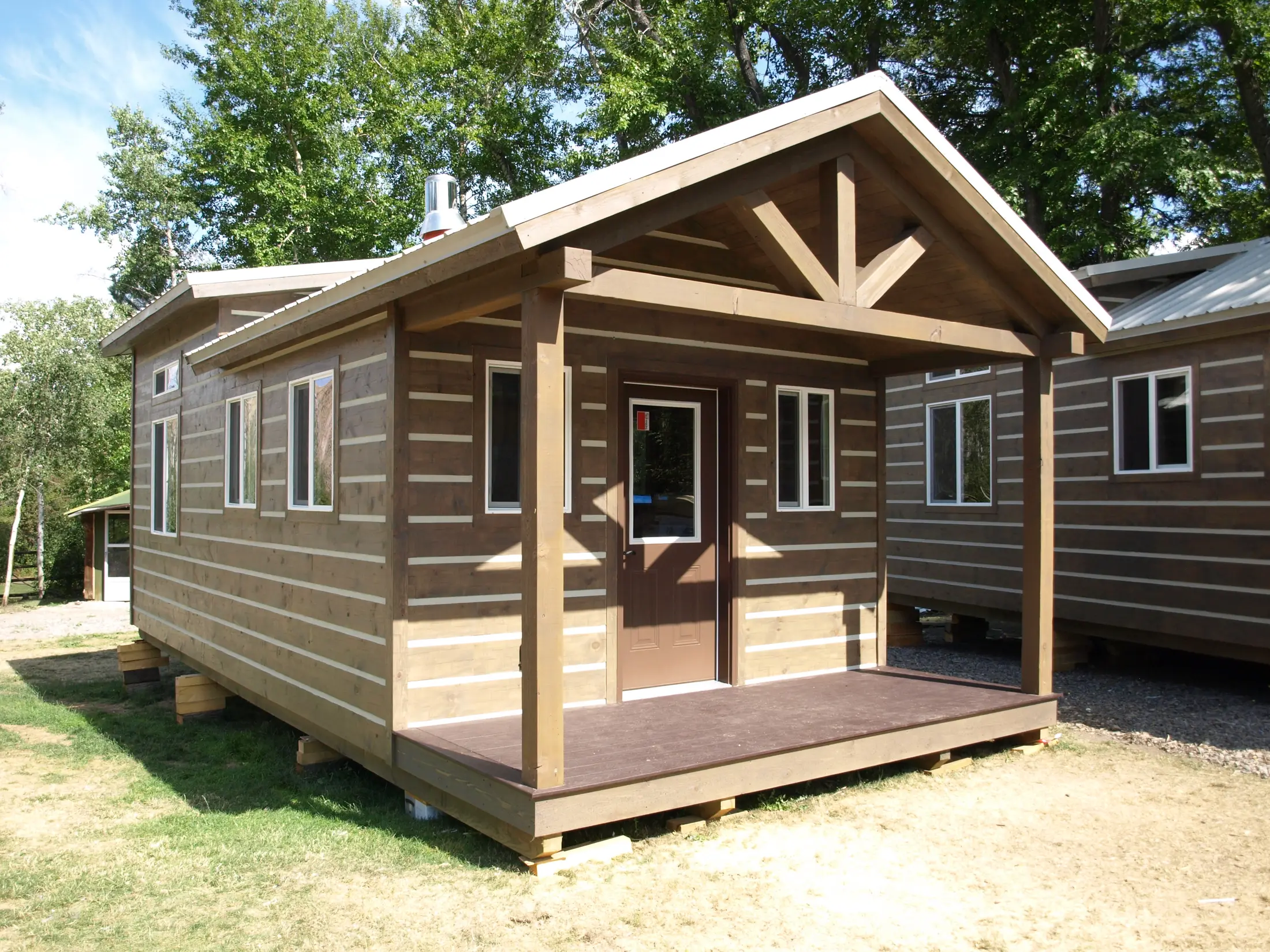
In short: delivery day is a truck, a trailer, a cabin, and a crew that has done this many times on roads like yours. Your job mostly happens before we arrive: a prepared pad, a clear path in, and honest answers to our access questions. Our job is getting the cabin down your road, onto your pad, set, leveled, and solid before we leave. Here is the whole day, in order, with nothing glossed over.
Most of the anxiety we hear from buyers is not about the cabin. It is about the last half mile: the gate, the cattle guard, the soft spot past the culvert, the turn that looks tighter every time you drive it. Fair enough. Southern Colorado land did not arrange itself for 40-foot loads. So this post walks through the day the way it actually goes, starting well before the truck leaves Gardner.
Before we load: the access conversation
Every delivery starts with questions, and we ask them bluntly because surprises on delivery day help nobody.
We want to know about your gates: how wide, and whether the approach to them is straight or angled. A gate that passes a pickup with room to spare can pinch a cabin load approaching from a bend. Cattle guards get the same scrutiny, mostly for width and the condition of the wings on either side. We ask about overhead lines and low branches along the route, because a cabin is tall on a trailer and a power line across your driveway is a stop-the-truck problem. We ask about the turns, especially anything tight between rock, trees, or buildings, and about grades, because steep and loose is a different animal than steep and graveled.
Then there is ground. Spring in the valleys and any wet stretch of summer can turn a two-track into something that swallows a loaded trailer. Soft ground is the single most common delivery complication in this part of the state, and it is also the most avoidable one: if the route is questionable, tell us, and we will plan around it or wait for it to dry. Getting stuck does not save anyone time.
Photos and a short video of the route, shot from the driver’s seat, answer most of this in five minutes. If the access is genuinely uncertain, we would rather look at it ahead of time than meet it for the first time with a cabin in tow.
What you prepare before the truck arrives
Site prep is the owner’s side of the deal, and it is not complicated: the cabin needs a pad that is level, firm, and reachable.
Level matters within reason. We can handle modest variation when we block and level the cabin, but a pad with real slope means shimming one side high, and that never looks or performs as well as ground that was cut flat to begin with. Firm matters more. A cabin holds its level over the years only as well as what it sits on, so a compacted gravel pad beats bare dirt, and bare dirt that has been compacted beats a spot that was mowed and called ready.
Reachable is the part people underestimate. The truck needs room to get to the pad, and room to leave. Walk your site and picture a truck and long trailer making the approach, backing in, and pulling out. If that picture requires a fifty-point turn or driving across your leach field, call us and we will talk through it. We go over pad requirements for your specific model and site when we schedule, and our delivery and setup page covers the basics if you are still in the planning stage.
One more thing: clear the path. Delivery day is a bad time to discover the firewood pile, the parked flatbed, or the low limb you have been meaning to cut.
What the crew does when we arrive
The first thing we do on site is look. The driver walks the last stretch of the approach and the pad before committing the load, checks the ground, and picks the line in. This takes minutes and prevents most problems. Then the cabin comes in slow. Backing a long load down a ranch driveway is unhurried, deliberate work, and watching it is most of the entertainment the day offers.
Once the cabin is over the pad, the real work is setting and leveling. The crew positions the cabin, gets it off the running gear or skids and onto its blocking, and then levels it carefully in both directions. Leveling is the part worth being patient about: doors, windows, and drains all behave for the life of the cabin based on how well this hour goes. The crew checks and rechecks, adjusts blocking, and does not call it done until the bubble agrees everywhere.
After that comes securing the cabin and a walk-around with you. We want you opening doors and windows while we are standing there, not discovering a question after the truck is gone.
If your cabin comes in two pieces
Larger models travel as two halves on separate loads, and delivery day works the same way with one added act: joining them. The halves are set on the pad in sequence, aligned, pulled together, and joined along the marriage line, then the connection is sealed and finished so the cabin reads as one building inside and out. It is a longer day than a single-piece set and the crew is more particular about pad and access, since two loads have to make the trip and land precisely. We walk two-piece buyers through the specifics for their model and site when we schedule the delivery, because the details depend on the cabin and the ground it is going to.
What can slow a delivery down
Honesty section. Weather moves deliveries, and in this part of Colorado that mostly means mud season and summer storms that turn good roads soft for a day or two. Access surprises slow things down: the gate that measured wider in memory than in steel, the branch nobody flagged. A pad that is not ready when the cabin arrives is the most frustrating delay of all, because it was preventable weeks earlier. None of these is a disaster. All of them are cheaper to solve before delivery day than during it, which is why we push so hard on the questions up front.
FAQs
How do I know if my road can handle a cabin delivery?
Send us photos or a video of the route, including gates, cattle guards, tight turns, grades, and any overhead lines. Most driveways that handle a hay trailer or a horse trailer comfortably can handle a cabin, but width, turning room, and soft ground are the deciders, and we would rather review your access ahead of time than guess.
What do I need to have done before delivery day?
A level, firm, compacted pad sized for your cabin, a clear path from the road to the pad, and honest answers to our access questions. We go over the pad requirements for your specific model when we schedule delivery. If the route is questionable in wet weather, plan for a dry stretch and keep the day flexible.
Does the crew level the cabin, or is that my job?
The crew levels the cabin. Setting, blocking, and leveling in both directions is part of every delivery, and it is the step we take the most time on because doors, windows, and plumbing all depend on it. Your part is the pad underneath: the better the ground, the better the cabin holds its level over the years.
If you are looking at our cabins and wondering whether your land can take one, that is exactly the conversation to have before you fall for a floor plan. Call us, describe your access, and we will tell you straight whether it is an easy delivery, a careful one, or a site visit first.